
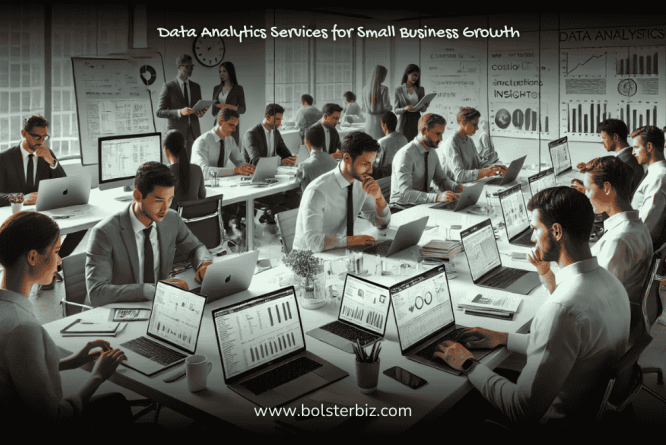
Data analytics services for small businesses helps growing the company and make smart choices. By collecting and analyzing data, companies can figure out what’s working and what’s not. This helps them improve their operations, learn more about their customers, and plan better for the future.
Data analytics tools help businesses find significant numbers and patterns that are hard to notice.
A Forbes report says companies that use data to make decisions are 23 times more likely to acquire new customers and 6 times more likely to retain their current ones. This shows how data can help small businesses grow and stay ahead of their competition.
This blog aims to explain everything about data analytics for small businesses.
Keep reading to find the benefits and how companies can succeed.
Why Data Analytics Services are Essential for Small Business?
Running a small business comes with many challenges. However, data analytics helps make sound decisions based on facts, not guesses. Small businesses collect data from many sources, such as social media, email marketing, credit card purchases, and Google Analytics. The important part is turning that data into information that helps them make informed decisions.
For example, data analytics can tell a business which marketing efforts are working, which products customers like the most, and how to improve customer service. With access to real-time data, companies can adjust their business analytics strategies quickly, ensuring they don’t waste time or money on things that don’t work.
According to a survey by MicroStrategy, 94% of companies say that data analytics is essential for their growth. This shows how much businesses rely on data to stay competitive.
3 Key Data Analytics Services for Small Business
Small businesses can use various data analytics services and marketing platforms with multiple data sets. Each one helps in a specific way. Let’s look at the main types:
1. Predictive Data Analytics Services
Predictive analytics helps small businesses understand what might happen in the future. It uses data from the past and present to predict future trends. For example, if a company knows what products customers bought last holiday, they can predict what people will buy this year.
Businesses can also use predictive analytics to forecast customer behavior. They can see patterns in buying habits and predict what customers might do next. This helps them create better marketing campaigns, stock the right products, and improve customer satisfaction.
Many companies use predictive analytics tools, such as Google Analytics, to forecast sales or customer trends. These tools help businesses stay one step ahead of their competitors.
2. Big Data Analytics Services
Big data refers to large sets of information collected from different sources. Analyzing big data can seem overwhelming for small businesses, but it’s worth the effort. Big data provides insights that small businesses can use to improve their operations and better understand their customers.
By analyzing big data, businesses can see patterns that help them make data-driven decisions. For example, a company might analyze its customers’ buying habits to determine what products are popular. They can also use this data to decide on pricing, promotions, and marketing strategies.
Using user-friendly analytics tools makes this process easier for small businesses. Tools like Google Analytics allow them to make sense of the data they collect quickly and turn it into actionable insights.
3. Data Analytics as a Services (DaaS)
Data analytics as a service means using cloud-based tools to analyze data. This is especially helpful for small businesses because they don’t have to invest in expensive software or hire full-time data experts. Instead, they can pay for the service when they need it.
Outsourcing data analytics can save small businesses time and money. Instead of spending resources on hiring and training an in-house team, they can let experts handle their data analysis, allowing them to focus on running the business.
Top 5 Benefits of Data Analytics Services for Small Business & Startups
Small businesses and startups operate in highly competitive environments where every decision counts. Data analytics services allow them to analyze, interpret, and use data to drive success. Businesses can optimize their strategies and boost growth by leveraging insights from customer interactions, marketing campaigns, and operational data.
Here are five key benefits of using data analytics services for small businesses and startups.
1. Enhanced Decision Making
Making the right business decisions is crucial, and data analytics removes the guesswork. Instead of relying on intuition, small businesses can base their decisions on solid facts and trends. With real-time and historical data access, companies can track performance metrics, identify patterns, and forecast future trends.
For example, a small retail store can use sales data analytics to determine which products sell the most and which are underperforming. If a particular product is consistently in high demand, the business can stock more and create special promotions around it. On the other hand, if a product isn't selling well, the company can discontinue it or offer discounts to clear inventory.
Additionally, according to a study by McKinsey & Company, businesses that leverage data analytics are five times more likely to make faster decisions than those that don't. Businesses can minimize risks, improve operations, and increase profits by making data-driven decisions.
2. Improved Customer Experience
Customers are the backbone of any business; keeping them satisfied is a top priority. Data analytics services help companies to understand customer preferences, behaviors, and expectations. By analyzing customer interactions, feedback, and purchase history, businesses can tailor their offerings to meet specific needs.
For example, an e-commerce startup can use customer behavior analytics to track visitors' website navigation. If analytics show that customers abandon their shopping carts before checkout, the business can investigate possible reasons.
The checkout process may be too complicated, or shipping fees may be too high. By addressing these issues, the company can improve user experience and increase conversions.
A customer satisfaction survey analysis can also reveal what customers love about a business and where it needs improvement. If many customers complain about slow delivery times, the business can optimize its logistics and set better expectations for delivery dates.
Businesses can improve customer retention and loyalty by using data analytics to enhance service quality and personalization.
3. Increased Employee Efficiency
Efficiency is critical for small businesses with limited resources. Data analytics helps businesses streamline processes, reduce waste, and improve productivity. By identifying workflow bottlenecks and inefficiencies, businesses can optimize operations and cut unnecessary costs.
For example, a restaurant using operational analytics can track peak dining hours, popular menu items, and customer wait times. If the data shows that customers frequently return a specific dish due to complaints about taste or quality, the restaurant can refine or remove the recipe from the menu.
If long wait times are a problem, the restaurant can adjust staffing schedules to ensure enough employees are available during busy hours.
Similarly, a manufacturing startup can use predictive maintenance analytics to track equipment performance. Instead of waiting for machinery to break down, predictive analytics can detect early warning signs of potential failures, allowing businesses to perform maintenance proactively. This reduces downtime, prevents costly repairs, and ensures smooth operations.
4. Improved Marketing Strategies
Marketing can be expensive, and small businesses must ensure that every dollar spent delivers results. Data analytics helps companies measure the effectiveness of their marketing efforts and optimize strategies for higher ROI.
By analyzing data from email campaigns, social media, website traffic, and customer demographics, companies can refine their marketing messages and target the right audience.
For example, a small online fashion store running ads on Facebook and Instagram can use marketing analytics to see which ads drive the most traffic and sales. If data shows that women aged 25-34 are the most engaged audience, the business can create campaigns specifically targeting that group.
Another useful application is A/B testing analytics, where businesses test two different marketing messages to see which one performs better. For instance, an email marketing campaign might test two subject lines to see which does better with responses.
By analyzing open and click-through rates, the business can determine which subject line gets better engagement and apply those insights to future campaigns.
According to HubSpot, companies that use data-driven marketing strategies achieve 5-8 times higher ROI than those that don’t. Businesses can continuously analyze data to improve their messaging, reach more customers, and increase conversions.
5. Competitive Advantage
Staying ahead of competitors in today’s fast-paced business world requires agility and innovation. Data analytics services allow small businesses to track industry trends, monitor competitors, and adapt to market changes quickly.
For example, a local coffee shop can analyze customer preferences and seasonal trends to introduce new flavors or promotions before competitors do. If data shows that customers prefer cold brew coffee during summer, the shop can launch a limited-time summer cold brew special to attract more customers.
A startup in the fitness industry can use trend analytics to identify emerging health trends, such as plant-based diets or wearable fitness technology.
By adapting its services or products to align with these trends, the business can attract health-conscious customers before its competitors catch on.
Moreover, businesses can use social media sentiment analysis to track what customers say about competitors. If customers complain about slow customer support from a competitor, a company can highlight its fast response time as a selling point. In such a scenario, outsourcing customer support is a good decision for quicker responses.
6 Key Trends in Data Analytics Services for 2025
There are various benefits of outsourced customer service data analytics. It helps businesses track how well they serve their customers. By collecting data on customer interactions, companies can see what’s working and what needs improvement. For example, they can track how long it takes to respond to customer complaints or how often customers make repeat purchases.
This data helps businesses identify areas for improvement in customer service, which leads to higher customer satisfaction and retention. Companies can encourage customers to return and even recommend the business to others by making them happy.
One study by American Express found that 86% of customers are willing to pay more for a better customer experience. This shows how important it is for small businesses to use data analytics to improve customer service.
Choosing the Right Data Analytics Tools
Small businesses should look for affordable, easy-to-use tools that integrate with other systems when selecting data analytics tools. Some companies may not have the budget for expensive tools, but plenty of options offer great value for the price.
Popular business intelligence tools like Google Analytics and Tableau are user-friendly and offer a range of features for small businesses.
These tools make tracking performance, analyzing trends, and turning data into actionable insights easy.
Small businesses should consider their specific needs and goals when choosing a tool. Do they need a tool that helps with marketing? Or are they more focused on improving operational efficiency? By picking the right tool, businesses can ensure they get the most value from their data analytics efforts.
Real-World Applications of Data-Driven Soultions
Data-driven decision-making isn’t just for businesses. It’s being used in many other areas, such as education, finance, healthcare, and e-commerce.
For example, schools use data to track student performance and improve learning outcomes. In finance, companies use data to analyze risks and make better investment decisions.
In healthcare, data analytics is helping doctors make more accurate diagnoses and improve patient care. And in e-commerce, businesses are using data to personalize shopping experiences and recommend products to customers.
These real-world applications show how powerful data analytics can be in making better industry decisions.
FAQs about Data Analytics Services for Small Business Growth
1. What are the best analytics tools for small businesses?
Tools like Google Analytics, Tableau, and Power BI are some of the best options for small businesses because they are affordable, easy to use, and provide valuable insights.
2. How can data analytics improve business intelligence?
Data analytics helps businesses gather and analyze information to make informed decisions, improving their operations and overall strategy.
3. Is big data analytics useful for startups?
Big data analytics can help startups understand customer behavior, identify trends, and optimize their operations, giving them a competitive edge.
4. How does predictive analytics help in decision-making?
Predictive analytics uses past data to predict future trends, helping businesses make smarter decisions and plan for the future.
5. What role does customer analytics play in business growth?
Customer analytics help businesses better understand their customers, allowing them to improve their products, services, and marketing strategies to drive growth.
In the End
Data analytics services play a massive role in helping small businesses grow and stay competitive. Leaders must use real-time data to make data-driven decisions. Companies can improve customer satisfaction, streamline operations, and develop better marketing strategies.
As more small companies adopt these tools, they’ll be equipped to handle challenges and seize opportunities.
If you’re looking to grow your business, now is the time to explore the benefits of data analytics services by BolsterBiz. Whether improving customer service or making smarter marketing decisions, data analytics can help your business thrive.
Don’t wait. Start using these tools today for a more prosperous tomorrow with BolsterBiz.
Get in touch for a seamless growth experience and enhanced data analytics services for small businesses and startups. Contact us today!