Data analytics is the process of examining data to find helpful information. It analyzes numbers, text, and patterns to help businesses make informed decisions. Analytics can be simple, such as web data extraction or checking monthly sales. And complex, like predicting next year’s customer demand.
It also helps businesses combine data from multiple sources, such as social media, websites, and customer databases, to gain a comprehensive view of their operations.
For small companies, analytics is a way to level the playing field with larger businesses.
Tools and guides, such as the Data Analytics Services 2025 Playbook Guide, help companies make sense of the data they collect.
Data mining is a part of analytics. While analytics gives a big picture, mining digs deeper to extract hidden patterns that are not obvious in regular reports.
What are Data Mining Services?
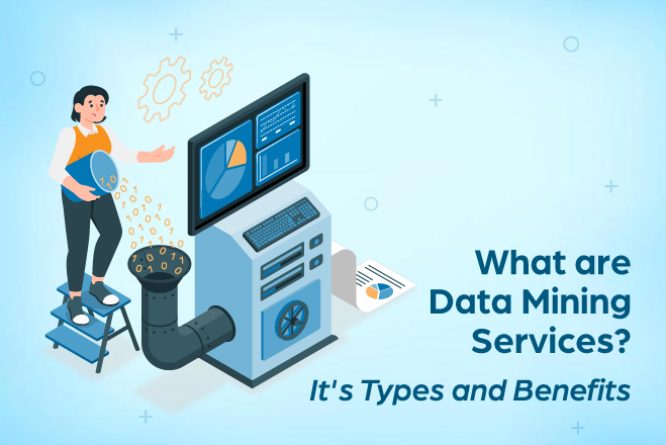
Data mining services are professional solutions that analyze large datasets to identify meaningful trends. Unlike simple reporting, mining looks for connections, patterns, and predictions that help businesses make better decisions.
For example, banks use mining to detect fraud. Retailers use it to understand which products customers buy together. Hospitals use it to determine which treatments are most effective. The goal is always to turn data collected into valuable insights that can guide decisions.
Many companies prefer data mining outsourcing rather than building internal teams. This approach provides a dedicated team of experts, modern house technology, and a faster turnaround time. Working with leading data mining companies also ensures high-quality work that businesses can trust.
What are the 6 Types of Data Mining Services?
Data mining is not a single process. There are several types, each serving different needs:
1. Classification
Classification involves categorizing data. For instance, customers can be marked as “loyal,” “new,” or “at risk.” This helps businesses decide where to focus marketing or retention efforts.
2. Clustering
Clustering groups similar data points together. Retailers use it to identify groups of shoppers with similar interests. This helps in making targeted offers that are more likely to work.
3. Regression
Regression predicts numerical outcomes. For example, a company can forecast sales based on past trends. This is part of creating an analytics model that helps plan inventory, budgets, and staff.
4. Association Rules
This method finds relationships between items. A common example is market basket analysis, which reveals which products are frequently purchased together. This helps businesses plan promotions or cross-selling.
5. Anomaly Detection
Anomaly detection finds unusual patterns. Banks use it to flag suspicious transactions. Manufacturing companies use it to spot defects in products early.
6. Sequential Patterns
Sequential pattern mining tracks sequences of behavior. For example, an e-commerce site can track what customers typically buy next after making a specific purchase. This helps improve recommendations and marketing strategies.
Many companies combine these types to get comprehensive data mining solutions. Small businesses can also learn from guides like “Data Analytics for Small Business” to understand how data mining works without incurring heavy investment.
Benefits of Data Mining Services
Data mining provides many advantages. Here are the key benefits explained clearly:
Smarter Decisions
Mining enables companies to make informed decisions based on facts. By identifying patterns in data, businesses can act with confidence instead of relying on guesswork. This is the essence of being data-driven.
Cost Efficiency
Building in-house mining teams is expensive. By outsourcing data mining services, companies can save on salaries, training, and software costs. Deloitte reports that 57% of businesses outsource analytics to reduce costs. Outsourcing also improves turnaround time, enabling companies to achieve results more quickly.
Want to know how much you can save with outsourced data analytics? Try this free Outsourcing Cost Calculator.
Handling Large Volumes of Data
Many organizations face large volumes of information daily. Mining helps organize this into relevant information. It also ensures that high-quality insights come from clean and structured data.
Real-Time Insights
Mining combined with Real-Time Data Analytics helps companies react quickly. For example, retailers can adjust promotions instantly if a product is trending.
Understanding Customers
Mining shows how customers behave online and on social media. This helps businesses improve services and marketing based on actual behavior.
Risk Control and Security
Mining can also improve data security. By identifying unusual patterns, businesses can prevent fraud or operational errors before they escalate into larger problems.
Competitive Advantage
Using services like Data Enrichment Services ensures that the data is accurate and updated. Companies with enriched data gain better insights than competitors who work with incomplete information.
Why Businesses Choose to Outsource Data Mining Services?
Outsourcing mining is practical for many US businesses. It provides access to skilled experts, advanced house technology, and proven processes. Companies also gain flexibility. Projects can scale up or down according to their needs.
For many, platforms like Outsource Data Analytics offer a full package: collecting data, analyzing it, and generating actionable insights. This approach is cost-effective and reduces internal workload.
Industrial Applications of Data Mining Services?
Data mining is used across industries:
- Finance: fraud detection, credit scoring, risk management.
- Retail: product recommendations, customer segmentation, demand planning.
- Healthcare: patient data analysis, disease prediction, treatment tracking.
- Manufacturing: supply chain planning, quality control.
- Technology: user behavior tracking, app performance insights.
Companies can combine mining with Predictive Analytics Tools to forecast future trends and plan proactively.
The Future of Data Mining
AI and machine learning are enabling faster and smarter mining. Businesses can analyze massive datasets in less time and get more accurate insights. IDC predicts that by 2026, 90% of enterprises will rely on AI-driven analytics.
Using AI in Data Analytics today can give companies a head start.
Final Thoughts
Data mining is essential for modern US businesses. It helps leaders make informed decisions, improve customer understanding, and control risks. Companies can analyze data from multiple sources, identify patterns, and derive valuable insights from them.
At BolsterBiz, we provide full data analytics services, including expert data mining solutions. Our team helps businesses collect, clean, and analyze data efficiently. By combining technology, experience, and a dedicated team, we deliver results that help companies grow, save costs, and make smarter, data-driven decisions.
Schedule a Free Consultation today and discover how our data analytics services can support your data operations and help you scales with various types of data mining services.
Finance, retail, healthcare, manufacturing, and technology benefit most from data mining. Banks use it for fraud detection, retailers for product recommendations, hospitals for patient outcome analysis, and manufacturers for supply chain optimization. Any industry generating large volumes of data regularly can use mining to turn that data into actionable business intelligence.
Most businesses should outsource data mining, especially if they lack specialized internal expertise. Outsourcing gives immediate access to skilled analysts, advanced tools, and proven processes without the cost of hiring, training, and managing a dedicated team. It is faster, more cost-effective, and scales up or down based on project needs.