
In today’s hyper-competitive digital world, understanding the SaaS customer journey is not just a marketing activity; it is a crucial business strategy. It’s a business imperative. SaaS companies operate on recurring revenue models. As a result, every user interaction becomes critical. A misstep in one stage of the customer journey can mean the difference between a loyal, long-term user and a churned customer.
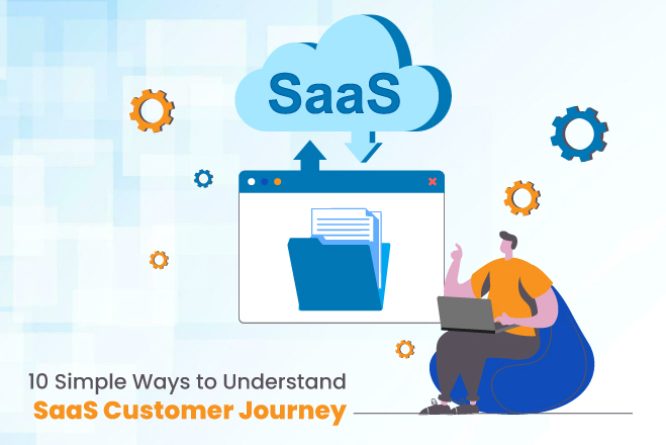
The SaaS customer journey encompasses all the experiences a user has with your SaaS product, from the moment they first hear about you to when they become advocates. Knowing this journey inside and out allows businesses to deliver better customer experiences, drive product adoption, and improve retention.
In this blog, we explore the ten most effective ways to understand and optimize each step of that journey, rooted in user behavior, business strategy, and empathy.
What is the SaaS Customer Journey?
The SaaS customer journey refers to the path a customer takes from becoming aware of a SaaS product to becoming a loyal user or advocate. Unlike traditional software, SaaS solutions rely on continuous engagement, support, and value delivery. The journey encompasses all interactions, whether through email, social media, product usage, or outsourcing customer support.
Mapping this journey helps SaaS companies identify touchpoints, understand pain points, and ultimately enhance the user experience. Each phase requires different strategies, messaging, and tools to guide the customer through the lifecycle.
According to a report by Zendesk, 74% of customers feel loyal to a particular brand when the company offers seamless, personalized experiences across the customer journey.
Also, explore our blog on what is customer support outsourcing is to extend your CX team without compromising on quality.
10 Simple Ways to Understand SaaS Customer Journey
1. Build Data-Backed Customer Personas
Understanding the SaaS customer journey begins with clarity about who your customers are. Build personas based on demographics, company size, job roles, and behaviors. Utilize CRM data, surveys, and feedback from your support team to identify what your potential customers truly value.
These personas guide every decision, from messaging and product design to the onboarding process and feature prioritization.
2. Map Each Journey Stage Visually
Break down the journey into stages: Awareness, Consideration, Decision, Onboarding, and Retention. Use journey mapping tools like Lucidchart or Miro to visualize each touchpoint.
A clear customer journey stage map helps cross-functional teams align and identify areas of friction. You can tie each stage to specific actions, KPIs, and team responsibilities.
3. Analyze Behavioral Data
Track what users do inside your app and across your website. Tools like Mixpanel, Amplitude, or Google Analytics offer in-depth insights into how customers interact with your content and products.
Watch for patterns. Where do users drop off during onboarding? Which features are underused? This behavioral lens helps decision-makers identify opportunities for improved engagement and feature discovery.
4. Monitor and Reduce Churn with Feedback Loops
Create ongoing feedback loops using NPS, CSAT, and in-app surveys. The goal is to determine what enhances customer satisfaction and what causes friction.
Exit interviews can also be goldmines for learning. When customers churn, ask why. Aggregate that data to spot trends.
A structured knowledge-based help system can also reduce churn by empowering users to find answers quickly.
5. Conduct Real Interviews, Not Just Surveys
Quantitative data is important, but qualitative insights give depth. Talk to users directly. Interview customers at different lifecycle stages. Ask them about their goals, why they signed up, and what they wish the product did better.
These stories help teams empathize with customers and create more human-centered product decisions.
6. Use Product-Led Growth Metrics
Track metrics tied to product adoption and self-serve success. Examine activation rates, time to first value (TTFV), and the frequency of feature usage.
If a user signs up for a free trial but doesn’t reach key milestones, they are likely to churn. Proactively guiding them through onboarding via tooltips, emails, or support can improve conversion and increase customer retention.
7. Align Content with Buyer Intent
Map content to each stage of the journey. At the Awareness stage, publish SEO blogs, infographics, and social media content. During the Consideration stage, offer comparison guides, B2B SaaS trends, and resources for customer support outsourcing. For informed decision-making, consider creating ROI calculators, offering free trials, and sharing case studies.
Content should educate, build trust, and move users to the next step, without being overly promotional.
8. Align Sales and Customer Success
Sales teams often have deep insights into what convinces buyers. Customer success knows what keeps them happy. Bridging these teams leads to consistent messaging and better handoffs.
When both teams understand the whole SaaS customer journey, they can collaborate to identify areas of friction, enhance demos, and reduce churn.
9. Track the Right KPIs
Focus on key performance indicators that align with each journey phase:
- Awareness: Website traffic, impressions, social reach
- Consideration: Demo requests, content downloads
- Decision: Conversion rate, CAC, trial-to-paid conversion
- Retention: Churn rate, CLV, product usage
- Advocacy: NPS, referral activity
Continuous tracking helps you optimize what’s working and fix what’s not.
10. Invest in the Right Tech Stack
Use tools that give you a 360-degree view of your customers:
- CRM tools (HubSpot, Salesforce) to manage customer interactions
- Analytics platforms (Google Analytics, Heap) to monitor behavior
- Customer feedback tools (Typeform, Delighted) to gather insights
- Onboarding platforms (Userpilot, Appcues) to guide new users
These systems help you track customers effectively and adapt your strategies in real-time.
What are the Key Stages of the SaaS Customer Journey?
Understanding the key stages of the SaaS customer journey is crucial for delivering a seamless user experience and fostering lasting relationships. Each stage represents a unique set of customer expectations, challenges, and opportunities to add value. By identifying and optimizing these stages, SaaS companies can guide users more effectively toward product adoption, loyalty, and advocacy.
1. Awareness Stage
This is the first moment a user becomes aware of a problem or inefficiency in their workflow and starts looking for solutions. At this stage, users are typically not yet aware of your brand, but they are actively researching or stumbling upon new ideas through content or search.
Strategies: To attract attention, focus on top-of-funnel marketing efforts. This includes SEO-driven blog content, guest articles, infographics, and engaging social media campaigns. The goal is to create visibility and demonstrate thought leadership. You can also leverage paid search and retargeting ads to capture interest.
Metrics: Monitor traffic sources, bounce rate, impressions, and page views. Social engagement metrics, such as shares and comments, also provide insight into reach and awareness.
2. Consideration Stage
At this point, potential customers are aware of your product and are evaluating it alongside other options. They are actively looking for a solution that aligns with their specific needs. This is where they begin comparing features, reading reviews, and possibly signing up for newsletters or downloading gated content.
Strategies: Provide in-depth resources such as product webinars, side-by-side comparison guides, B2B SaaS trends reports, and case studies. Make your unique value proposition stand out clearly. Email nurture sequences that address pain points and use cases can also be helpful.
Metrics: Measure return visits, demo requests, content downloads, and time on site. If they’re engaging with more than one content asset, it’s a sign they’re seriously considering your SaaS product.
3. Decision Stage
This is the make-or-break moment. Users are now ready to try or buy. They might be comparing pricing, reading testimonials, or assessing how easy it is to get started. This stage demands clarity and confidence from your product and team.
Strategies: Offer personalized demos, free trials, pricing calculators, and onboarding materials to enhance user experience. Live chat support and transparent pricing can reduce friction. Streamline your sign-up process to eliminate unnecessary steps.
Metrics: Key metrics include trial activation rates, trial-to-paid conversion rates, and drop-off points within the funnel. If users abandon the signup, it’s a signal that there’s friction.
4. Retention Stage
After a user converts, the focus shifts to keeping them engaged. Since SaaS businesses rely heavily on recurring revenue, increasing customer retention is more cost-effective than acquiring new users. This is where users experience the product more deeply and expect ongoing value.
Strategies: Deliver value through a seamless onboarding process, proactive communication, in-app tutorials, webinars, and personalized emails. Share regular product updates and involve customers in roadmap discussions when possible. Implement a robust customer success program that provides one-on-one support and regular check-ins.
Metrics: Watch churn rate, CLV, and product engagement frequency. Utilize the Net Promoter Score (NPS) and support ticket volumes to gauge customer satisfaction. A healthy retention stage reflects user satisfaction and a strong realization of value.
5. Advocacy Stage
Loyal users who see consistent value become brand evangelists. These users share testimonials, post reviews, refer others, and become part of your community. This stage not only attracts new users but also strengthens existing relationships.
Strategies: Launch referral programs, reward active users, and encourage customers to share their stories. You can also create ambassador programs and engage them in beta testing new features. Building a community around your SaaS brand improves visibility and loyalty.
Metrics: Track referrals, customer reviews, case study participation, and social shares. Monitor NPS and user-generated content metrics. The advocacy stage is a strong indicator of long-term brand health.
Together, these stages form a roadmap that helps SaaS companies guide customers from initial interest to passionate advocacy. When aligned properly, the SaaS customer journey becomes a continuous feedback loop of value delivery, learning, and relationship-building.
To create a cohesive SaaS customer journey, align strategies with each stage:
- Personalize communication through automation and segmentation
- Educate users early with clear, value-driven messaging
- Simplify onboarding to shorten time-to-value
- Reward loyalty with incentives or early access to features
Remember, the journey is not a linear process. Some users move back and forth. Adapt and evolve continuously.
What are the Strategies for Each Stage of the SaaS Customer Journey?
To create a cohesive SaaS customer journey, align strategies with each stage:
- Personalize communication through automation and segmentation
- Educate users early with clear, value-driven messaging
- Simplify onboarding to shorten time-to-value
- Reward loyalty with incentives or early access to features
Remember, the journey is not a linear process. Some users move back and forth. Adapt and evolve continuously.
Tools to Enhance Customer Experience
Technology plays a significant role in understanding and improving the journey:
- CRM Systems (e.g., Salesforce) help segment users and manage engagement.
- Onboarding Platforms like Appcues help streamline the onboarding process.
- Analytics Tools (e.g., Amplitude, GA4) provide real-time data on user behavior.
- Feedback Tools (e.g., Delighted, Typeform) show what users love or dislike.
Together, these platforms enable a smooth, intuitive customer experience.
Measuring Success and Key Performance Indicators (KPIs)
You can’t improve what you don’t measure. Focus on KPIs that reflect experience and business value:
- Churn Rate: Percentage of users who cancel
- Customer Lifetime Value (CLV): Total expected revenue per customer
- Net Promoter Score (NPS): Willingness to recommend
- Customer Satisfaction (CSAT): Happiness after specific interactions
A study by ProfitWell found that improving retention by just 5% can increase profits by 25% to 95%.
Conclusion
Conclusion
Understanding the SaaS customer journey is no longer optional. It's the backbone of building great products, lasting relationships, and sustainable revenue.
By investing in research, analytics, cross-team collaboration, and the right tools, you can uncover what matters to your users at every touchpoint. Whether it's reducing churn, improving product onboarding, or aligning teams, mastering this journey is key to thriving in a SaaS world.
If you're looking to build a more resilient business model, explore our guide to recession-proof SaaS and e-commerce with outsourcing and learn how smart customer support can drive growth.
Also, strengthen your SaaS customer journey with our customer support outsourcing services. Our team of global experts can efficiently handle customer queries at a competitive rate.
Focus on the journey. Everything else will follow.
FAQs about SaaS Customer Journey
1. What is the SaaS customer journey?
The SaaS customer journey encompasses all interactions a user has with a SaaS product, from initial awareness through consideration, decision-making, and retention phases.
2. Why is mapping the customer journey important for SaaS businesses?
Mapping the journey helps identify key touchpoints and potential pain points, allowing businesses to enhance user experience and increase retention.
3. What tools can assist in improving the SaaS customer journey?
Tools such as CRM systems, analytics platforms, customer feedback tools, and onboarding software can provide valuable insights and streamline the user experience.
4. Which KPIs are crucial for measuring the success of the SaaS customer journey?
Key KPIs include churn rate, Customer Lifetime Value (CLV), Net Promoter Score (NPS), and Customer Satisfaction Score (CSAT).
5. How can SaaS companies reduce churn during the retention stage?
By implementing effective onboarding processes, maintaining regular communication, and continuously delivering value through product updates and support.