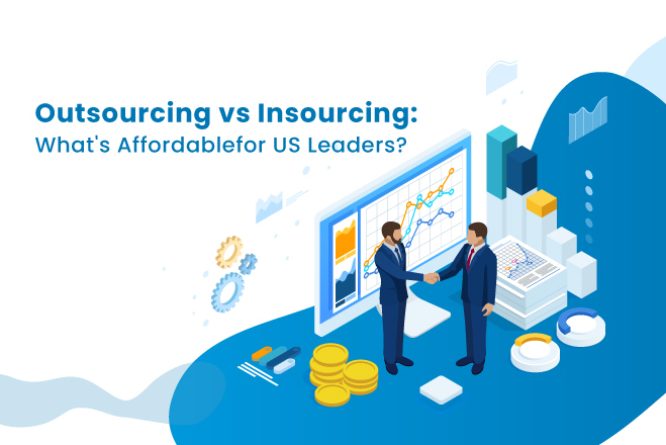
Outsourcing vs insourcing is not a dry choice, it’s a strategic turning point for business operations . U.S. leaders must weigh trade-offs between cost, control, and growth. Some firms lean hard into outside help. Others cling to in-house squads. Many land somewhere in the middle.
At its heart, this debate asks: should we outsource work to external experts, or rely on our house team? The cost numbers matter. But so do trust, mission, and risk.
Below we walk you through what outsourcing means, what insourcing means, and how to decide between insourcing and outsourcing in 2025.
What is Outsourcing?
Outsourcing means contracting a third-party or outsourcing firm to run a part of your business practices for you. Instead of relying entirely on internal employees, you lean on external providers for services you choose to delegate.
Common uses include customer support outsourcing, customer services, IT helpdesk, back-office accounting, content work, and more. Outsourcing services let you tap specialized skills and reduce fixed overheads.
One survey by Design Rush shows companies typically achieve 15–30 % labor cost reductions by outsourcing noncore functions.
Another report notes that around 70 % of businesses cite cost reduction as a primary driver for outsourcing.
Because outsourcing scales, you can add or trim staff without the burden of full internal hires. It frees your team to focus on their core offerings instead of routine tasks.
Still, when you outsource, you risk losing control over quality control, revealing sensitive intellectual property, or misaligning with your culture.
See our detailed blog: What is customer support outsourcing?
What is Insourcing?
Insourcing means keeping the task inside your own organization. You rely on your internal resources, hire or assign staff, and manage every part of the function.
You see this when companies build internal R&D labs, maintain their own marketing department, or run in-house customer success squads.
Insourcing offers tighter oversight and direct control. If the work touches your core value, or handles sensitive IP, insourcing can guard your interests. It helps with continuity, alignment, and embedding culture.
Yet insourcing is not free. It incurs recruitment, training, infrastructure, management, and ongoing overhead. It is inherently time consuming, especially when scaling.
Over the long term, insourcing may yield payoff in proprietary knowledge, stronger brand identity, and better integration with your strategy.
Want to see how much you can save with Outsourcing? Tyr our Outsourcing Cost Calculator for free.
Outsourcing vs Insourcing: What are the Key Comparisons
To choose wisely, leaders must compare these factors:
1. Labor and Overhead
Internal employees require salary, benefits, workspace, and tools. Outsourcing firms absorb many of these costs across clients. The result: often greater cost savings when outsourcing routine work.
2. Ramp-Up and Training
Hiring and training new internal staff often wastes months. Outsourcing gives you ready teams. In volatile periods, that agility matters.
3. Quality and Control
With insourcing, oversight is direct and flexible. Outsourcing requires strong SLAs (service level agreements), regular reviews, and tight governance to protect quality control.
4. Flexibility and Scalability
Outsourcing firms can adjust faster to demand spikes or drops. In-house teams adapt more slowly and carry fixed cost burdens.
5. Risk and Security
Sensitive operations, trade secrets, or complex IP are often best kept internal. Outsourcing may introduce external risk of exposure.
6. Focus and Strategy
If too many functions are insourced, your internal team may drift from core priorities. Outsourcing helps internal employees avoid being stretched across tasks that dilute focus.
When to Choose Outsourcing and Why it Works Better?
You’ll find outsourcing more affordable and effective when:
- The function is noncore to your competitive edge.
- The skills required are not available internally.
- You need rapid scale for projects or seasonal loads.
- You aim to reduce costs and convert fixed into variable spend.
For example, many companies choose customer support outsourcing so internal teams focus on product innovation.
Or they outsource CRM cleanup instead of burdening internal staff, as seen when using CRM cleansing to enhance decision-making.
With outsourcing, a company can focus on growth, not daily tasks.
When to Choose Insourcing?
Insourcing becomes the right call when:
- The work is strategic, unique, or tightly tied to your business promise.
- You must protect intellectual property, sensitive data, or customer trust.
- You require full control over processes, brand, and user experience.
- You already have scale and capability internally.
For example, many firms keep product design, critical engineering, or proprietary analytics inhouse. They might outsource the user support, but insource the feedback loops that influence design and brand.
Blended or Hybrid: What to Choose when deciding to choose Outsourcing vs Insourcing?
Most forward-thinking U.S. leaders don’t pick sides. They build hybrid models.
They insource what defines them and outsource what drains them. For instance:
- A SaaS company may insource feature development but contract with top customer support outsourcing companies in US to handle user tickets.
- A marketing agency may insource creative strategy but outsource repetitive design and content work.
- Leaders may follow trends like customer support trends in 2025 or AI in customer support, outsourcing parts of this while retaining oversight of voice, tone, and direction.
This blend gives flexibility, control, and resilience.
Risks and Mitigation
Every path has trade-offs. On the outsourcing side:
- Vendors may underperform or fail to meet your standards.
- Hidden costs or scope creep may eat gains.
- Data or IP may leak if not protected.
- Communication and alignment issues may arise across time zones.
Mitigate by writing tight contracts, choosing measured metrics, running pilot projects, and keeping oversight inhouse.
For insourcing:
- Fixed costs may burden your budget.
- Teams may lack specialized skills you could get externally.
- Growth surges may overwhelm internal capacity.
- Management overhead can distract senior leaders.
Mitigate by scaling cautiously, using contractors for spikes, cross-training teams, and closely tracking costs.
Role of Technology when Choosing Outsourcing vs Insourcing
Tech is reshaping outsourcing vs insourcing. Automation, AI, cloud platforms, and distributed work make external models more viable than before.
Some leaders outsource implementation of tools like generative support bots while insourcing oversight and strategy, so they tap innovation without losing control. Others review AI in customer experience trends to decide whether to build internally or partner.
Similarly, when dealing with CRMs, companies may outsource the setup and refer to types of CRM and use cases guides, while training internal staff to run the system.
What is the Cost, Capability, & the Bottom Line in Outsourcing vs Insourcing
In many cases, outsourcing wins in early cost efficiency. Insourcing often wins in deeper control and strategic strength down the road.
For context: in Deloitte’s 2025 Global Business Services survey, about 50 % of organizations claimed over 20 % savings from their shared or outsourcing operations.
Another report states: companies that outsource HR via PEOs often see 27 % ROI on cost savings.
But numbers only frame the debate. Your firm’s mission, risk tolerance, growth plans, and culture play the deciding role.
Final Thoughts
Outsourcing vs insourcing is not simply a cost equation. It is a strategic design layer in how your company operates and grows.
Outsource repetitive, noncore, scale-intensive tasks. Insource what defines your brand, protects your IP, and demands tight quality control.
The most affordable path often lies in blending the two. Use external partners to relieve load, while internal teams protect what matters.
In 2025 and beyond, leaders who master this balance of deciding between incousring and outsourcing can scale faster. Leaders who know when to pass a baton and when to hold it, will be the most resilient.
Want to see what benefits outsourcing can bring to your organization?