Speed is everything in today’s business world. Companies that can adapt quickly to changes, understand their customers more effectively, and make informed, data-driven decisions have a significant edge. That’s where real-time data analytics comes in. In 2025, this capability will no longer be a luxury; it will become a necessity for companies that want to remain competitive and relevant.
If you’re a business leader in the US, especially in the B2B space, understanding real-time data analytics can shape the way you operate and grow. This guide will help you get familiar with the concept, tools, applications, and future trends. We’ll also highlight some common challenges and guide how to overcome them.
Real-time data analytics enables organizations to process data in real-time, rather than waiting for scheduled reports to be generated. This enables companies to identify trends, pinpoint issues, and make informed decisions promptly. Whether it's optimizing supply chains, improving customer service, or reacting to social media feedback, this kind of speed is powerful.
According to Forbes, 74% of businesses claim to want to be data-driven, but only 29% are successful in connecting analytics to action.
With that in mind, let’s explore how real-time analytics is changing the game and how your company can harness it in 2025.
What is Real-Time Data Analytics?
Real-time data analytics refers to the process of examining data as soon as it becomes available. Unlike traditional methods, such as batch processing, where data is analyzed in chunks at scheduled intervals, real-time analytics occurs almost instantly.
In simple terms, real-time analytics enables businesses to see what's happening in real-time. Be it a sudden spike in website traffic, a change in customer behavior, or anomalies in financial transactions.
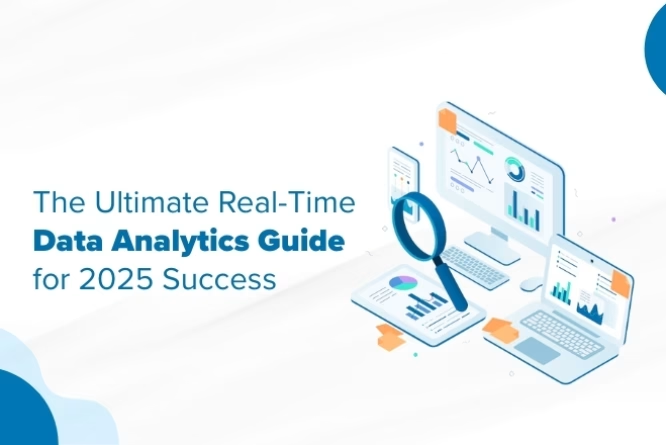
Real-time analytics relies on technologies that process streaming data in real-time. The continuous flow of information from sources like sensors, apps, websites, and social media platforms. This is often integrated with data visualization tools that display insights on live dashboards.
Industries ranging from retail and banking to healthcare and logistics are now embracing real-time analytics to gain an edge. For example, e-commerce platforms utilize it to optimize pricing and personalize customer experiences in real-time. Similarly, logistics firms can reroute deliveries based on current weather conditions or traffic.
The benefits of real-time analytics are clear: improved agility, enhanced efficiency, and a better customer experience. It enables teams to act proactively before issues escalate, predict trends, and adapt more quickly to market changes.
As real-time data becomes increasingly accessible, the use of real-time analytics systems will continue to grow. It's not just a tool, it’s a strategy for smarter business operations in 2025 and beyond.
The Importance of Real-Time Data Analytics in Modern Business
Businesses are shifting from batch processing to real-time analytics because they want to be agile. Traditional data analysis methods, like reviewing reports at the end of the week or month, simply don’t cut it anymore.
Imagine running marketing campaigns and waiting days to find out they aren’t working. With real-time analytics, you can see instantly how your audience is reacting and pivot in minutes. This is one of the key benefits of real-time analytics.
Modern companies rely on real-time data analytics to stay ahead of demand, meet customer expectations, and compete effectively. With customer preferences changing faster than ever, this adaptability is vital for survival and growth.
Real-time analytics also plays a critical role in enhancing the customer experience. You can immediately identify issues or opportunities and act before they escalate. Whether it’s responding to support issues or tracking product performance, the advantage is clear.
A report by Dresner Advisory Services found that the adoption of real-time analytics has grown by 49% in the past year alone.
If you're exploring solutions, consider this comprehensive 2025 playbook on data analytics services to determine which options best suit your company.
Technologies Enabling Instant Data Processing
1. Streaming Data Analytics Tools
Platforms like Apache Kafka, AWS Kinesis, and Google Pub/Sub have revolutionized how we handle streaming data. These tools ingest data continuously and enable real-time processing.
Instead of waiting for end-of-day uploads, these systems analyze data streams in real-time. For businesses in retail, logistics, or digital services, this can be the difference between reacting to a problem and preventing it.
2. Edge Computing and Low-Latency Processing
Edge computing involves processing information closer to where it’s generated, such as on devices or local servers. This approach reduces delays and is essential for IoT devices, healthcare tools, and other time-sensitive applications.
If you're in manufacturing or logistics, this technology can help you respond faster and reduce downtime.
3. Integration with AI and Machine Learning
AI and ML algorithms can now detect patterns, flag anomalies, and even predict outcomes in real-time. This is especially useful in fraud detection, customer behavior prediction, and recommendation engines.
Using a real-time analytics system, banks can detect suspicious activities as they happen. E-commerce companies can offer personalized product suggestions based on recent browsing activity. This creates improved customer experiences that feel personalized and responsive.
Want to see how AI and analytics can help small businesses, too? Explore our dedicated guide for small business data analytics.
Implementing Live Dashboards for Decision-Making
1. Importance of Real-Time Dashboards
Real-time dashboards bring key metrics to life. Instead of looking at spreadsheets, leaders can glance at visual dashboards that show live updates. This enhances transparency and facilitates collaboration among different teams.
Dashboards can cover various business operations, including sales, supply chain status, website performance, and employee productivity. Having access to real-time data analytics enables swift action without delay.
2. Best Practices in Dashboard Design
Clean, simple layouts are most effective. Prioritize high-impact visuals and avoid clutter. Design your dashboard for its audience. The CEO may want high-level KPIs, while marketing may wish to have campaign-level insights.
Good dashboard design is about relevance. Include only the most important metrics for quick action.
3. Tools and Platforms
Popular tools include Tableau, Power BI, and Google Looker Studio. They support real-time integration and offer customizable options.
Whether you use off-the-shelf software or build a custom tool, your choice should depend on the level of flexibility and control you need over data visualization.
To better understand what works for your setup, compare options in this guide on in-house vs. outsourced data analytics services.
Challenges and Solutions in Real-Time Analytics
1. Handling Data Volume and Velocity
Real-time systems must handle constant streams of data. From millions of clicks on a website to transaction logs, it’s easy to get overwhelmed.
Strategies such as data partitioning, load balancing, and utilizing cloud-native architectures aid in managing high-volume streaming analytics. Tools like Kafka or Snowflake are commonly used to scale data systems.
2. Ensuring Data Quality and Accuracy
In fast-paced environments, accurately analyzing data is crucial. Duplicate records, missing fields, and misformatted data can lead to wrong conclusions.
Automated data cleaning processes, validation rules, and standardization help reduce noise and increase the trustworthiness of data.
3. Infrastructure Costs and Scalability
Real-time analytics requires a robust infrastructure. That means higher costs if not managed well.
Adopting serverless models or containerization can help. You only pay for what you use and scale based on real-time demand.
4. Compliance and Data Governance
Handling real-time data involves a significant amount of sensitive information, including customer records and financial data.
You must comply with privacy laws, such as GDPR and HIPAA. Embed security checks and data masking in your pipelines. Governance should not be an afterthought.
If you're unsure whether to build in-house or use an external partner, read this guide on outsourcing data analytics.
Future Trends in Instant Data Utilization
1. Rise of Predictive and Prescriptive Analytics
Real-time is just the start. With machine learning, companies are utilizing live data to predict future outcomes and suggest actionable steps.
This combination turns data into not just insight, but guidance, helping leaders make better choices every time.
2. IoT and Real-Time Analytics and the Edge
In sectors such as manufacturing, energy, or agriculture, sensors generate vast volumes of data every second. By processing this data on-site (i.e., edge computing), companies respond instantly without sending data back and forth.
This trend helps save time, cut costs, and improve outcomes in areas that require urgent responses.
3. Democratization of Real-Time Insights
No-code and low-code platforms are empowering non-technical users. Business teams can now build dashboards, run queries, or receive alerts without relying on IT.
This shift enables more teams to act on real-time data, improving overall agility and decision-making speed.
Want to dive deeper? Here’s a look at the latest data analytics innovations you should watch in 2025.
Conclusion
In 2025, reacting slowly is not an option. Real-time data analytics is transforming how companies operate, from tracking performance to serving customers.
The ability to access, understand, and act on data in real-time can separate leaders from laggards. Investing in the right tools, strategies, and culture can unlock this power.
We offer top-notch data analytics services in the US and worldwide. Our team of global experts can handle your real-time data analytics solutions with utmost precision. We can handle all your big data challenges, allowing you to focus on core operations.
Don’t just aim for better insights. Aim for faster, smarter decisions.
Schedule a Free Consultation today
FAQs about Real-Time Data Analytics
1. What is real-time data analytics?
It refers to the process of analyzing and processing data immediately as it is generated. Unlike traditional methods that rely on delayed reports, real-time analytics provide instant insights for quicker decision-making.
2. What are the benefits of using real-time data analytics?
It improves decision-making speed, enhances understanding of customer behavior, and boosts overall business operations. You can react instantly to changes, leading to better performance and improved customer outcomes.
3. What tools are used for real-time analytics?
Common tools include Apache Kafka, AWS Kinesis, Power BI, Tableau, and Google Pub/Sub. These tools enable you to process data instantly and support advanced features, such as data warehouse integration.
4. What does real-time data analytics affect customer experience?
It enables companies to respond promptly to customer feedback, purchasing behavior, and support requests. This leads to better customer experience and more loyalty.
5. Is real-time analytics suitable for small businesses?
Absolutely. Tools and services are now more affordable and scalable. Small businesses can benefit significantly by staying responsive and data-driven without heavy investment.