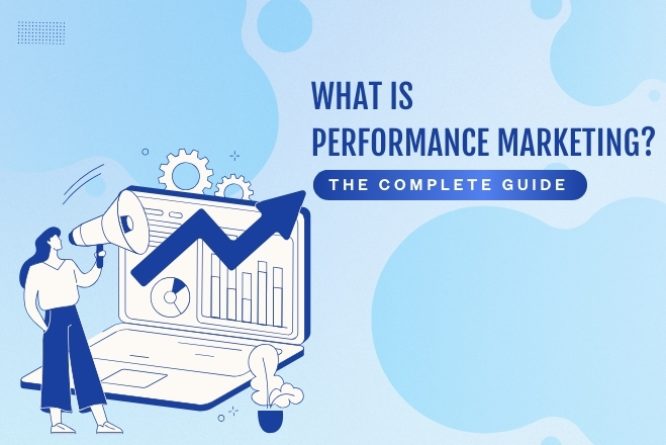
Marketing is changing. Growth leaders want proof, not promises. They want sales, leads, and revenue they can trace. That is why Performance Marketing matters. It links spend to outcomes. It delivers control, speed, and clear accountability for B2B and enterprise teams.
In simple terms, Performance Marketing is a model where the advertiser only pays when a defined action happens. That action can be a click. It can be a lead. It can be a sale. This is different from the old approach where you paid for reach. Here you pay for results.
So, let’s unleash the nitty-gritty of performance marketing in this complete guide.
Why Performance Marketing Matters for Leaders in 2025?
Budgets are tight. Boards want clarity. Teams need wins they can measure. Performance Marketing fits this demand well. It focuses on measurable results at every step. It also gives you levers to scale or pause spend in minutes.
The U.S. digital ad market tells the story. In 2024, internet advertising revenue reached about $258.6 billion, up roughly 15% year over year. That is strong momentum for digital advertising even in a complex economy.
For leaders who seek predictable demand, this model is useful. Use targeted tests. Double down on the winners.
What is the Definition of Performance Marketing and Key Ideas?
Performance Marketing means outcome first. You pick a goal. You pick channels. You track actions. You pay when the action fires. That is it.
Common goals include cost per lead, cost per sale, signups, downloads, or booked demos. Clear goals make it easy to align with sales. Clear goals also reduce debate about value.
This approach demands strong landing pages. It also needs clean tracking. Without both, even a good ad will underperform. If you want to reach decision makers fast, consider PPC for startups. Paid search can connect you with high intent in hours, not months.
Who is the Target Audience for Performance Marketing?
Any company that values accountability is a fit. Yet several groups benefit most.
Startups need fast feedback. Mid-market firms seek efficiency. Large enterprises need scale with guardrails. B2B leaders want a pipeline they can forecast. E-commerce brands want profitable orders. Agencies want a model they can defend with data.
To support the long game, pair paid with organic. Invest in benefits of SEO for startups. Search engine optimization compounds. It also lowers blended acquisition costs over time.
Types of Performance Marketing?
There are many paths to outcomes. Below are the types of performance marketing leaders use today. The best mix comes from testing and from your buyer’s journey.
1. Affiliate and Partner Programs
Affiliates promote your product and earn a fee when they drive a result. You can pay on cost per acquisition cpa or on cost per lead. This model scales reach with low upfront risk. It is popular in software, retail, and finance.
U.S. affiliate programs have grown for years, and they now represent a meaningful slice of orders and revenue for many brands. The model works best with tight rules, a clean brief, and fair incentives. Make sure your contracts define allowed channels and brand guardrails.
2. Native Advertising and Sponsored Content
Native ads match the look and feel of the host platform. Sponsored content goes deeper with articles or guides that tell a story. These formats educate while they persuade. They also avoid hard interruptions.
Sharethrough suggests why leaders use them. In controlled tests, consumers looked at native ads more than traditional banners and showed stronger lifts in recall and purchase intent. See Sharethrough’s research on attention and brand lift. This supports using native for complex offers where trust matters.
3. Search and Shopping Ads
Search captures intent. People type a need and ask for answers. When your offer matches the query, you can win fast. For B2B firms, search is a key engine for demos and trials. It also pairs well with content marketing that answers buyer questions.
Shopping ads showcase products with price and image. They fit direct sellers. They also help defend brand terms from competitors.
4. Social Media and Advertising
Social platforms offer precise targeting. LinkedIn can filter by title, company size, or industry. Meta and TikTok offer reach and creative testing at speed. Use social to drive leads, event signups, or qualified traffic to webinars and reports.
Top of funnel video plus retargeting often performs well. Keep your pipeline view clear. Sync conversions back to the platform for better optimization. For a modern mix, explore AI-driven marketing strategies. AI helps with creative, bidding, and audience building.
5. Display Ads and Programmatic
Display ads build reach and enable retargeting. Programmatic buying automates placement and bidding. It lets you test many sites and formats at once. For B2B, programmatic can reach niche publications where your buyers read daily.
Keep creative fresh. Avoid banner fatigue. Use frequency caps. Use outcome goals. Tie all traffic to focused landing pages to avoid waste.
6. Video and OTT
Video tells a story quickly. It builds trust with faces and voices. OTT and CTV let you reach cord-cutters with precise audiences and household targeting. Use short spots for awareness and longer cuts for education. Retarget viewers with search and display to harvest demand.
7. Email and CRM Retargeting
First-party data is your strategic asset. Upload lists to walled gardens. Build lookalikes. Nurture with helpful email content. Respect privacy rules. As cookies fade, lean into cookieless marketing. First-party signals will drive your next wave of wins.
What are the Core Performance Marketing Channels?
Most programs start with three pillars. Search, social, and programmatic. Others add affiliates and native. The right mix depends on price point, sales cycle, and buying committee size. Pilot small. Read patterns. Then scale with confidence..
How a Performance Marketing Campaign Works?
Here is a simple flow that most teams follow.
Define the goal and KPI. Pick your channels. Build ads that speak to one job to be done. Route clicks to focused landing pages. Track events with clean UTM tags and pixels. Review daily. Kill what misses the mark. Fund what meets the goal.
Keep offers simple. Free trials, demos, and calculators convert well. If you sell complex services, use gated content. Pair a clear form with a promise to help. Respect buyers’ time. Short forms usually win.
Performance Marketing Pricing Models You Should Know
You will see a few common models. CPC pays per click. CPL pays per lead. CPA pays per sale. CPM pays per thousand views. Choose the model that maps to your objective and margin.
Work backward from value. If a qualified lead is worth $400, a $150 CPL can work. If a customer is worth $12,000 in gross profit, a $2,000 CPA can be a win. Build simple guardrails and publish them to the team. It speeds decisions and avoids turf wars.
For teams that live in the numbers, build a weekly scorecard. Include spend, clicks, cost per lead, cost per acquisition, pipeline, and revenue. Share it with sales. Share it with finance. Clarity builds trust.
Benefits of Performance Marketing
The benefit of performance marketing starts with control. But the list is longer. Below are advantages CEOs cite most often.
1. Get Measurable Results
You can measure every step. From impression to sale. That lets you see what works and why. It also lets you stop what does not work before it burns budget. This transparency is central to board level reporting.
2. Budget Efficiency and Speed
You fund outcomes, not just exposure. You can scale winning ads by the hour. You can lower bids or pause when demand slows. That level of agility is rare in other channels.
3. Predictable Growth and Planning
Once your CPA stabilizes, you can forecast. Sales and finance can trust the plan. Hiring becomes easier. Inventory planning improves. Confidence rises across the company.
4. Creative and Message Testing
You can test headlines, images, and offers in days. The data tells you which message resonates. It also feeds your brand work and your sales scripts. The loop is tight and useful.
5. Full-funnel Coverage
Performance programs can span awareness, consideration, and conversion. Mix native units for education with retargeting for harvest. Use webinars and case studies to qualify mid-funnel. Tie the whole thing to revenue.
Common Challenges and How to Solve Them
Attribution. Buyers touch many channels. Use multi-touch models. Align with finance on one source of truth. Keep it simple enough to run weekly.
Rising costs. Auctions get crowded. Offset with stronger creative, better offers, and tighter audiences. Explore second-tier platforms where CPMs are lower.
Data gaps. Privacy rules and device tracking make it harder to follow users. Invest in server-side tagging and first-party data. Refresh consent language. Build value so users opt in.
Creative fatigue. Ads wear out. Plan a monthly refresh. Test new hooks, proof, and angles. Use modular creative so the team can swap parts fast.
To manage these issues with a small team, review the marketing tasks to outsource. You can keep strategy in-house and scale execution with trusted experts.
How to Build your Performance Marketing Strategy
Start with your numbers. What is a qualified lead worth? What is your target CPA? Which personas buy fastest? Put these on a one-page brief.
Then choose channels. Search for high intent. Social for reach. Native for education. Affiliates for scale. Programmatic for retargeting. Tie everything to one analytics view. Document the rules so the team can move fast without confusion.
Next, invest in content marketing that answers buyer questions. Publish benchmarks, ROI stories, and price explainers. Use this content in ads and in sales. Over time, search engine optimization will reduce blended CAC and lift quality. A strong content engine also helps your sales team close more deals with proof.
For founders and CMOs who want a playbook, see AI-driven marketing strategies. You will find practical ways to use AI for creative testing, bidding, and forecasting.
Creative, Offers, and Landing Pages
Short copy wins attention. Proof wins trust. Combine the two. Use clear headlines, obvious benefits, and strong social proof. Show logos, quotes, or data in every ad or page.
Match each ad to a single page. Remove distractions. Keep forms short. Use progressive profiling for later steps. Add chat for fast answers. Test one change at a time to learn what actually improves conversion.
If you are rebuilding a funnel, start with the offer. A calculator, a pricing sheet, or a crisp demo video can lift conversion quickly. Then polish design. Solid code and fast load times matter.
Measurement and Governance
Publish a simple scorecard every week. Track spend, clicks, leads, pipeline, revenue, and return on investment. Add a column for experiments. Call the winners and the losers. Share why you made changes. That ritual builds a culture of learning.
Hold monthly reviews with sales. Compare lead quality and close rates. Tune targeting. Tune offers. Tighten follow up SLAs. Speed matters. Most leads go stale within days.
The Future of Performance Marketing
AI is accelerating testing, bidding, and creative workflows. Privacy is pushing teams toward first-party data. Context and content are back in focus. Retail media networks add new reach with commerce signals. The playbook keeps evolving, but the principle stays the same. Tie spend to outcomes. Learn fast. Scale what works.
If you are shaping your roadmap, pair paid with brand. Build a durable moat with content, product, and service. Then let Performance Marketing amplify it.
Why Choose B0lsterBiz for Performance Marketing?
You want a partner who speaks revenue, not just clicks. BolsterBiz builds programs that connect ad spend to pipeline and profit. Our digital marketing services align with your sales motion. We set clear goals. We report like operators.
Our team blends strategy with hands-on execution. We run disciplined tests across search, social, native, and programmatic. We write offers that convert. We build landing pages that load fast and speak to what buyers care about. We design measurement that finance can trust.
We move with urgency. We share what we learn each week. We protect your brand while we push for better results. And we bring proven playbooks for startups, mid-market firms, and enterprises.
Need an audit first? We start with the free 2025 digital marketing audit guide. We run lean. We think like owners. And we care about outcomes. That is what Performance Marketing should deliver.
Schedule a free SEO audit today.
Frequently Asked Questions (FAQs) about Performance Marketing?
1. What is the fastest way to start performance marketing?
Pick one offer and one channel. Launch a small test with a clear goal. For many B2B teams, search or LinkedIn are best to start.
2. How much budget should I set aside?
Work backward from value. If a qualified lead is worth $400, an initial monthly test of $10,000 can show signal in a few weeks. Scale from there.
3. Which metrics matter most in performance marketing?
Track CPL, CPA, conversion rates, pipeline, and revenue. Add quality checks with sales. Fast feedback improves results.
4. How do I avoid ad fatigue?
Rotate creative monthly. Use new angles, new proof, and new formats. Build a library so you can swap assets fast.
5. What about privacy and cookies?
Plan for a world with less third-party tracking. Invest in first-party data, server-side tagging, and consent.
6. Can a small team do performance marketing?
Yes. Start focused. Automate where you can. Outsource execution as needed. But outsourcing marketing tasks can free your team to focus on strategy.
7. How does organic fit with paid?
They work together. Paid drives fast tests and demand. Organic builds authority and lowers costs. Use content and SEO to reinforce the ads.
Final Thoughts
Performance marketing is not just a trend. It is a smarter way to grow. By paying only for outcomes, leaders reduce risk and improve ROI.
For U.S. B2B executives, this model ensures accountability, scalability, and predictability. It makes every dollar count. Whether you use display ads, native, affiliates, or social, the focus is the same: measurable results that fuel business growth.