Data Analytics Consulting Rates by Experience Level
 Rates for data analytics consulting scale sharply with experience, and understanding the tiers helps you avoid overpaying for junior work or underpaying for specialist expertise.
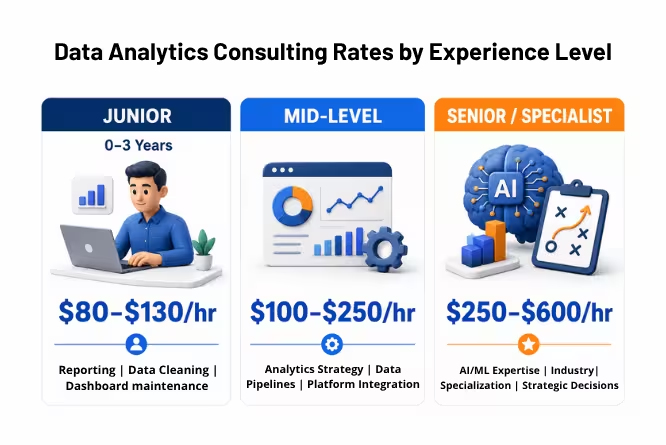
Junior data analysts (0-3 years) run $80 to $130 per hour. This tier suits reporting, data cleaning, dashboard maintenance, and supporting more senior consultants on larger projects, not strategic decision-making.
Mid-level consultants run $100 to $250 per hour, the broadest band in the market. This tier typically handles analytics strategy, pipeline architecture, and cross-platform integration work, the bulk of standard data analytics consulting services engagements.
Senior and specialist consultants, particularly those with AI/ML expertise or sector-specific knowledge, command $250 to $600 per hour. For context, Glassdoor’s May 2026 data puts the average salaried US data analytics consultant at $120,293 per year, roughly $58 per hour equivalent, well below what external consultants charge once you factor in overhead, specialized expertise, and flexibility.

Big Data Consulting vs. Data Analytics Consulting: Pricing Differences
Big data consulting and data analytics consulting get used interchangeably, but they price differently, and knowing the distinction matters when you’re comparing quotes.
Big data consulting specifically, work involving infrastructure design, distributed systems, and large-scale data pipeline engineering, averages $200 to $350 per hour, consistently higher than general analytics work. This reflects the deeper technical and infrastructure expertise required to build systems that handle massive, often unstructured data volumes.
Data analytics consulting covers a wider spread, from $80 to $600 per hour, because it spans everything from junior reporting work to senior strategic advisory. Platform-listed agencies on Clutch average $25 to $49 per hour; this reflects agency-structured pricing models where overhead is distributed across multiple engagements, rather than individual specialist rates. For independent specialist consultants or enterprise advisory firms, expect rates significantly above this range.
Understanding this distinction, infrastructure-heavy big data work commands a premium over general analytics work, helps you scope a request accurately before asking for quotes, rather than being surprised when a big data engineering quote comes in well above a standard analytics proposal.
Need specialized analytics or engineering talent fast? See how BolsterBiz’s IT staff augmentation services embed data specialists directly into your team.
Offshore and Nearshore Data Analytics Consulting Rates
Location is one of the biggest levers on big data analytics pricing, and it’s worth comparing before you commit to a US-only search. Offshore analytics consulting, particularly from India, typically runs 40 to 60 percent lower than equivalent US-based rates, with hourly costs ranging from $24 to $145.
Eastern Europe sits in the middle, generally $35 to $100 per hour, offering closer time-zone overlap with US and European clients than South Asian offshore options. Latin America runs $30 to $80 per hour, with the added advantage of same-or-near-time-zone alignment for US-based teams.
Lower cost doesn’t automatically mean lower quality, many offshore and nearshore firms specialize in the exact same tooling and methodologies as US-based consultants, but it does mean more due diligence on portfolio, references, and communication practices before signing.
Pricing Models: Hourly, Project-Based, and Retainer
Data analytics consulting services are typically billed through one of three models, and choosing the right one depends on how defined your scope already is.
Hourly billing works best for discovery phases, audits, and exploratory work where the full scope isn’t known upfront. It’s the most common structure for initial engagements before a larger project is defined.
Project-based, scope-tiered pricing fits well-defined deliverables. Small-scope work, single-dashboard builds, department-level reporting cleanup, one-off audits, runs $5,000 to $15,000. Mid-scale projects, full analytics strategy, pipeline architecture, multi-dashboard builds, or CRM integration, run $15,000 to $50,000. Large-scale engagements, complete analytics transformations, tool implementation, and team training, run $50,000 to $150,000 or more.
Retainer pricing gives you regular, ongoing access to a consultant or team rather than paying per project. Retainers average around $10,000 per month, typically ranging from $3,000 to $20,000 depending on scope and access level, and suit companies that need continuous analytics support rather than a single deliverable. A typical retainer at this range includes a set number of monthly hours, ongoing dashboard maintenance and updates, and a standing availability window for ad hoc questions, rather than a fixed list of one-time deliverables.
See how BolsterBiz structures retainer-based support plans across other service lines for comparison.
What Drives Cost Up or Down
Several factors move price within any of these models. Data complexity matters most: clean, structured data can cut project cost by 20 to 40 percent compared to messy, poorly organized datasets that require extensive cleanup before real analysis can begin. Project scope, industry specialization (healthcare and financial services command premiums due to compliance requirements), and whether you’re hiring onshore US talent versus nearshore or offshore consultants all shift data analytics consulting pricing meaningfully within the ranges above.
Platform and tool licensing is frequently excluded from consulting quotes. Common platforms like Snowflake, Tableau, and Databricks add $500 to $5,000 per month separately from consulting fees, always confirming whether a proposal includes or excludes platform costs before signing. For a look at how BolsterBiz prices specialized, compliance-heavy engagements, see the customer support pricing guide.
How to Evaluate a Data Analytics Consulting Proposal
If you’re the buyer reviewing a quote, a few checks separate a fair proposal from an inflated one. Verify the quoted hourly rate or project total against the tiers above, a $400/hr rate needs to be justified by genuine senior or specialist-level work, not applied by default. Look for scope creep risk in bundled proposals: if discovery, execution, and ongoing support are lumped into one number with no breakdown, ask for it to be separated so you know exactly what you’re paying for at each stage.
A legitimate proposal breakdown should specify the pricing model used (hourly, project, or retainer), name the experience tier of the consultants assigned, and state clearly whether tool and platform licensing is included or billed separately. If a proposal can’t answer those three questions plainly, that’s worth asking about before you sign.
How to Build Consulting Proposals Based on Actual Cost Data
If you’re the one writing the proposal, not just evaluating one, the rate data above is exactly what should anchor your pricing. Here’s how to build consulting proposals based on actual cost data rather than guessing at a number.
Start by anchoring your rate to a specific tier, junior, mid-level, or senior, and be explicit about why. A client questioning a $200/hr rate is far easier to convince when you can point to where that sits within the $80-$600 market range and explain what tier of work justifies it.
Separate discovery and audit work from execution work in the quote itself. Bundling them into one number hides where the actual cost drivers are, and clients increasingly expect this breakdown before signing.
Reference market rate ranges explicitly rather than presenting a number in isolation. Citing that mid-scale projects typically run $15,000 to $50,000 gives a client context for where your quote falls and why.
Build a data-quality assessment into your process before finalizing scope, since messy data can shift real cost by 20 to 40 percent, and surfacing that early prevents scope disputes later. Finally, match your pricing model to the engagement type: hourly for exploratory work, fixed-scope for defined deliverables, retainer for ongoing needs. A model-to-scope mismatch is one of the fastest ways to lose a deal, the pricing looks wrong even when the underlying rate is fair.
For a deeper look at how engagement structures affect pricing, see BolsterBiz’s guide to IT staff augmentation pricing models.
Conclusion
Data analytics consulting costs vary enormously, from $80 an hour for junior reporting work to $600 an hour for senior AI/ML specialists, and the right number depends entirely on matching experience tier, pricing model, and scope to your actual need. Understanding data analytics consulting services pricing means looking past a single headline rate to the full picture: hourly versus project versus retainer, onshore versus offshore, and what drives cost up or down within each.
Whether you’re evaluating a quote or building one, the fundamentals are the same: define scope clearly, anchor pricing to real market data, and account for data quality and licensing costs before work begins.
Ready to scope a data analytics engagement with transparent, tier-based pricing? Talk to BolsterBiz about your project today.
Frequently Asked Questions
1. How much does data analytics consulting cost in 2026?
Rates range from $80 to $600 per hour depending on experience level: junior analysts run $80–$130/hr, mid-level consultants $100–$250/hr, and senior AI/ML specialists $250–$600/hr. Project-based pricing runs $5,000 to $150,000+ depending on scope, and retainers average around $10,000/month.
2. What is the difference between big data consulting and data analytics consulting pricing?
Big data consulting, which involves infrastructure and large-scale pipeline engineering, averages $200–$350/hr, consistently higher than general data analytics consulting. Data analytics consulting spans a wider range, $80–$600/hr, since it covers everything from junior reporting to senior strategic advisory work.
3. Should I hire a data analytics consultant hourly or on retainer?
Hourly billing suits discovery, audits, and exploratory work with undefined scope. Retainers, averaging $10,000/month, suit companies needing ongoing, continuous analytics support. Project-based pricing works best for well-defined deliverables like a single dashboard build or a full analytics transformation.
4. How do I build a consulting proposal based on real cost data?
Anchor your rate to a specific experience tier and explain why. Separate discovery work from execution in the quote. Reference market rate ranges explicitly for context. Assess data quality before finalizing scope, since messy data can shift cost by 20–40 percent.
5. How much does offshore data analytics consulting cost compared to US rates?
Offshore consulting, particularly from India, runs 40–60% lower than US rates, typically $24–$145/hr. Eastern Europe runs $35–$100/hr, and Latin America runs $30–$80/hr. All three offer meaningful savings over US onshore rates, with varying time-zone overlap.
6. What is included in a data analytics consulting retainer?
A typical retainer, averaging $10,000/month, includes a set number of monthly consulting hours, ongoing dashboard maintenance and updates, and standing availability for ad hoc questions. It does not usually include platform or tool licensing, which is often billed separately.
7. How do I know if a data analytics consulting quote is fair?
Compare the quoted rate against published tier benchmarks for the consultant’s experience level. Check whether discovery, execution, and support are broken out separately rather than bundled. Confirm whether tool licensing is included, and ask which pricing model, hourly, project, or retainer, the quote is actually using.
-
This article is written by Sudhir Tomar. He is a content writer at BolsterBiz, covering niches like outsourcing, customer support, digital marketing, and more. He crafts content that informs, ranks, and connects with the right audience. Outside of work, Sudhir is passionate about sports, travel, and adding the perfect flavors to dishes. For any related queries reach at sudhir.tomar@bolsterbiz.com