No fintech company wants to find out about a bug from an irate user. In this QA outsourcing case study, you will explore how BolsterBiz built a Quality Engineering function from the ground up, embedding a dedicated QE team directly inside the client's agile squads. Here's a quick look at what changed at this client, and how.
That's what this fintech platform was risking before partnering with BolsterBiz. The client is a fast-growing, US-based financial wellness company offering interest-free access to earned wages through a data-for-value model. Good product. But it had been live for nearly two years without a QA team, test automation, or documentation. Every release carried the risk that a defect would reach real users.
BolsterBiz built a Quality Engineering function from the ground up, embedding a dedicated QE team directly inside the client's agile squads.
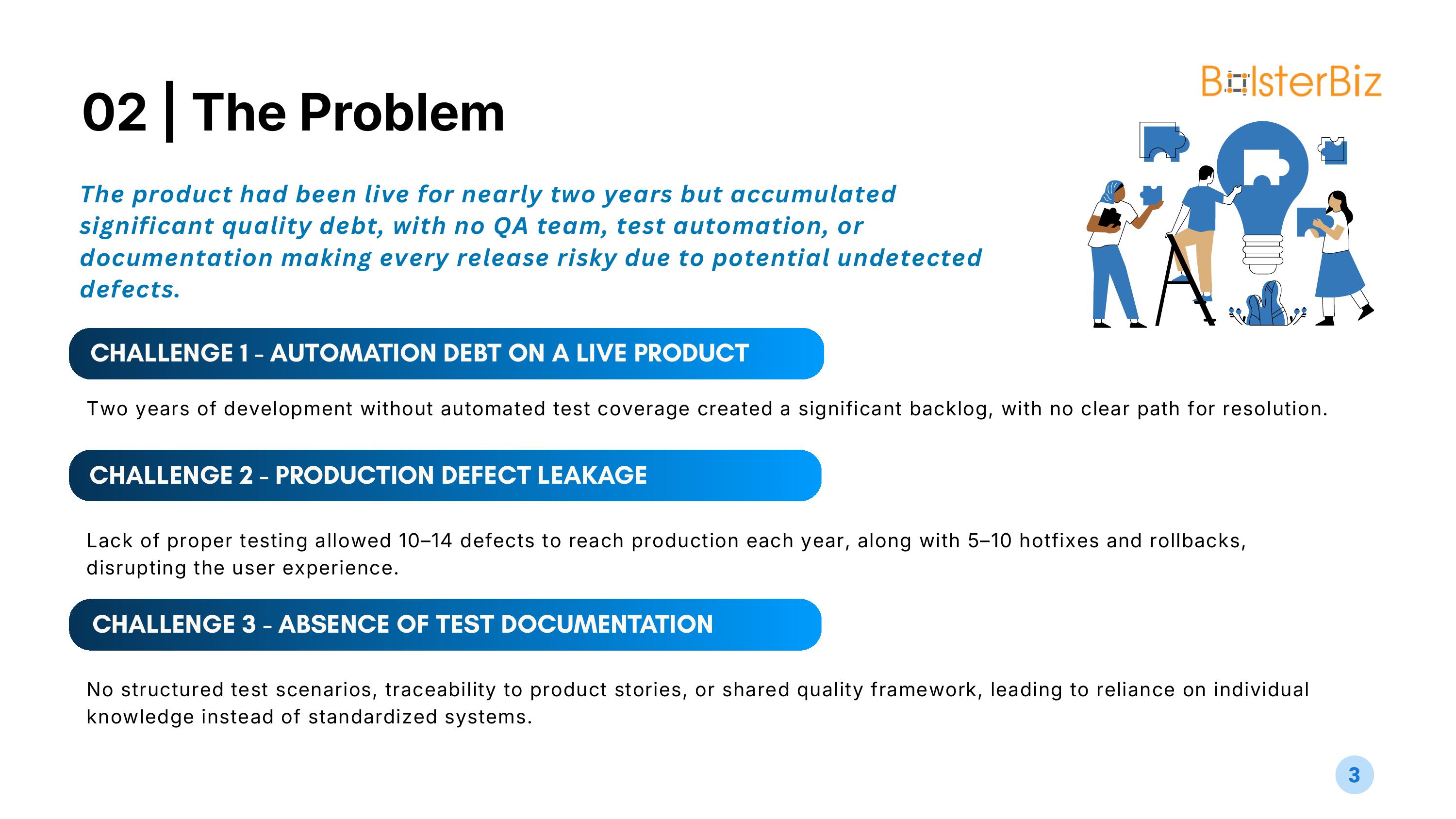
Before BolsterBiz, the client's release process just wasn't built to catch problems before users did.
No QA team, no test automation, and no documentation — just a live product accumulating risk with every release.
Weak testing let 10–14 defects slip through each year, along with 5–10 hotfixes and rollbacks that disrupted the user experience.
There were no structured test scenarios and no traceability back to product stories, so quality relied on individual knowledge instead of a repeatable process.
With no safety net in place, every deploy carried the chance of an undetected defect reaching real users.
We started by studying the architecture, defect history, and existing user stories to identify the real risk.
Then we went risk-first: automating a high-risk, end-to-end user journey as a proof of concept before scaling further. We built automated smoke tests into the GitLab CI/CD pipeline, so every commit triggered a quality check, and then expanded to full regression coverage across the web, mobile, API, and database layers.
Production defects and hotfixes dropped sharply. That built enough trust to position the QE team as a long-term quality partner across all the client's agile squads.
This case study walks through exactly how the QE team was built, the tools used, and how coverage scaled sprint by sprint.
Unlock the full case study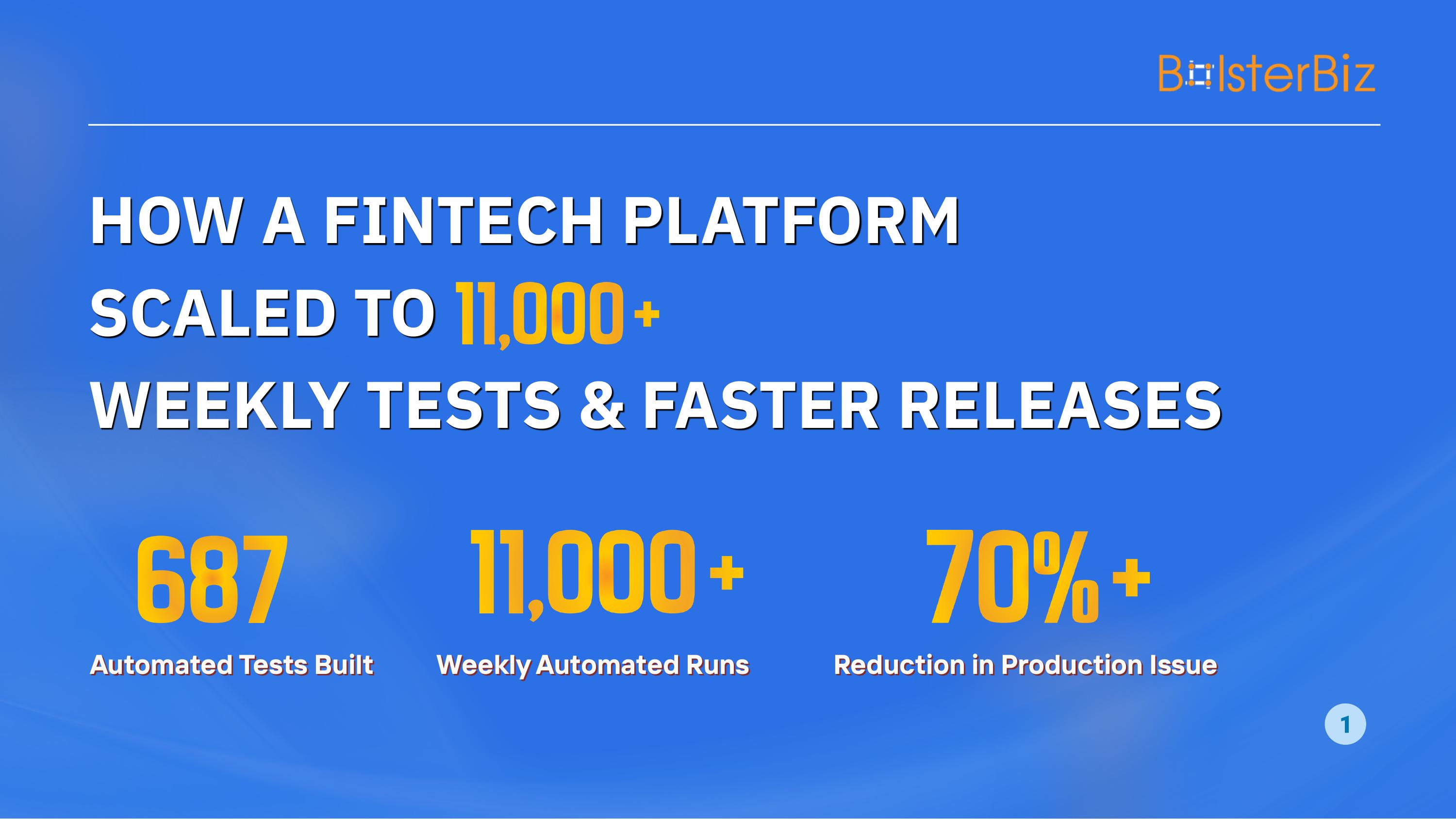

This is just the highlight reel. The full case study walks through:
No spam — just the PDF and an optional follow-up.
Something went wrong sending your details. Please try again.