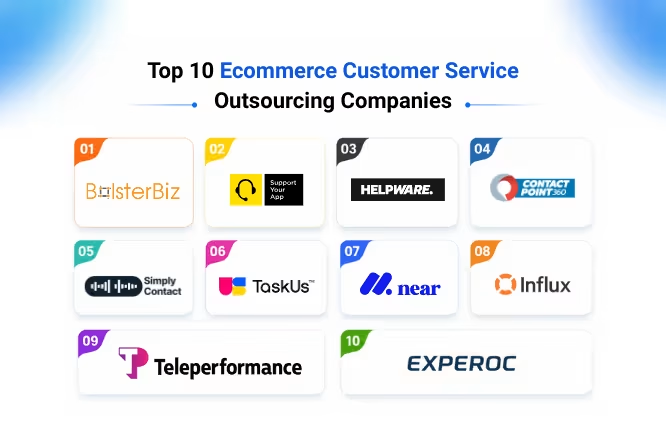
If you are looking for the best ecommerce customer service outsourcing companies right now, the short answer is: BolsterBiz, SupportYourApp, Helpware, ContactPoint 360, Simply Contact, TaskUs, Near, Experoc, Teleperformance, and Influx. These are providers that ecommerce brands are actively relying on in 2025 to handle live inquiries, reduce response times, and keep customers satisfied across every channel, including live chat, email, voice, and social media.
But of course, which one is the right fit for your business depends on a few things, like your store size, your budget, the platforms you use, and whether you need round-the-clock multilingual support or just overflow coverage during peak seasons. So let us walk through all ten options properly.
| Key Takeaways |
|
Why Ecommerce Brands are Moving Toward Outsourced Support
Running an online store is not a 9-to-5 operation. Customers are shopping at midnight, on weekends, and during holiday sales. When they have a question or a problem, they want answers fast. That kind of always-on coverage is genuinely difficult to maintain with an in-house team, especially for growing ecommerce businesses that are still figuring out their support volume.
So, what is customer support outsourcing? It means handing over your customer-facing interactions to a team of trained support agents who work as an extension of your brand. They know your products, your tone, and your policies. And because they are shared or dedicated teams run by an experienced partner, they can scale up or down as demand fluctuates.
According to a Salesforce State of the Connected Customer report, 88% of customers say the experience a company provides is just as important as its products or services. For ecommerce brands, especially, that experience often comes down to how well you handle customer interactions when something goes wrong. And that is exactly where outsourcing comes in.
There is also the cost angle. If you have ever run the numbers on what it actually costs to hire, train, manage, and retain in-house support staff, you know it adds up fast. Benefits, office space, software, turnover, and training time. The comparison between in-house vs outsourced customer service cost often surprises business owners who assumed outsourcing was the more expensive route.
Beyond cost, there is something to be said for tapping into the expertise that dedicated customer support outsourcing partners bring. They have handled thousands of tickets across dozens of ecommerce verticals. They know what good quality control looks like. They already have the systems, workflows, and training infrastructure in place.
The Top 10 Ecommerce Customer Service Outsourcing Companies
1. BolsterBiz
BolsterBiz is a strong first choice for ecommerce brands that need flexible, omnichannel customer support without the complexity of managing it internally. The company provides round-the-clock support across live chat, email, voice, SMS, social media, and in-app channels, with a clear focus on matching the tone and standards of each brand they work with.

What sets BolsterBiz apart is the account-level management model. Each client gets a dedicated account manager who stays involved from onboarding through ongoing quality reviews. This means issues get flagged and fixed faster, and the support team actually feels like an extension of your internal team rather than a disconnected third party.
We also work across a solid stack of help desk tools, including Zendesk, Gorgias, Freshdesk, LiveChat, HelpScout, Zoho Desk, and more. For ecommerce brands running on Shopify or WooCommerce, the Shopify WooCommerce integration is smooth and requires little technical setup on your end.
Key Features
- True 24/7 omnichannel support across chat, email, voice, SMS, and social
- Dedicated account manager included in every engagement
- Works with all major help desk platforms (Zendesk, Gorgias, LiveChat, HelpScout, and others)
- Custom training on product knowledge and brand voice before going live
- Scalable team size to handle seasonal peaks, promotions, and growth phases
- Transparent pricing with no surprise add-ons
Pros
- Personalized onboarding process with a real needs assessment before deployment
- A brand-focused approach means support agents sound like they actually work for your company
- ISO 27001 certified, which matters for ecommerce data security
- Flexible engagement models for both growing SMBs and larger operations
- Strong focus on customer satisfaction metrics and response time improvement (95% of clients report faster response times in week one)
Best For
Ecommerce businesses of all sizes that want a flexible, brand-aligned outsourcing partner with genuine multichannel coverage and transparent pricing. Especially well-suited for Shopify and WooCommerce stores that need quick setup without heavy integration work.
For a full breakdown of what BolsterBiz offers and how to get started, visit our customer support outsourcing services page.
2. SupportYourApp
SupportYourApp has been in the customer support outsourcing space for over 16 years and has built a reputation for combining human empathy with AI tooling. Their ecommerce support teams handle everything from basic order status queries to more complex technical issues, making them a solid choice for brands that have tiered support needs.
Their AI suite includes a chatbot builder, a voice agent capable of handling 32 languages, and an autonomous AI agent that can resolve queries on its own for common scenarios. For routine inquiries like delivery updates and return requests, up to 80% of tickets can reportedly be handled without a human agent stepping in.
Key Features
- 24/7 support across chat, email, phone, and social platforms
- Human and AI hybrid model for faster resolution on repetitive queries
- Support in 60+ languages for global ecommerce reach
- PCI DSS and ISO 27001:2022 compliance for data and payment security
- Team scaling in under 30 days for seasonal demand spikes
Best For
Mid to large ecommerce brands that need multilingual, AI-enhanced support with strong data security standards.
3. Helpware
Helpware is known for its CX-first culture and flexible engagement models. They offer both dedicated and shared support options, making them accessible to ecommerce brands at different stages of growth. Their onboarding process is fast, and their QA programs are rigorous enough to maintain a consistent brand voice even across large support teams.
Real-time dashboards are a standout feature here. You can track response times, SLA adherence, and resolution rates without waiting for a weekly report, which is helpful for ecommerce businesses that move quickly and need to catch issues early.
Key Features
- Customized workflows aligned with each brand’s tone and policies
- Omnichannel coverage including email, chat, voice, and social media
- CX strategy consulting for brands looking to improve support architecture
- High CSAT scores across retail and DTC ecommerce brands
Best For
Mid- to large-scale ecommerce retailers seeking an experienced partner with strong data transparency and flexible staffing models.
4. ContactPoint 360
ContactPoint 360 positions itself as a full-service CX outsourcing provider for ecommerce brands managing high volumes of customer inquiries across multiple touchpoints. They bring together AI-driven automation with human support teams, focusing on consistent multichannel delivery from order management through to returns and loyalty programs.
Their infrastructure is built around compliance, with PCI DSS, GDPR, and ISO certifications in place. They also offer onshore, nearshore, and offshore delivery options, giving ecommerce brands flexibility in structuring their support operations.
Key Features
- Omnichannel CX orchestration across voice, chat, email, SMS, and social
- AI-assisted routing and conversation analytics for faster resolution
- Peak season scalability with rapid team ramp-up for Black Friday and similar events
- Secure infrastructure designed for enterprise-grade data protection
Best For
Enterprise ecommerce brands with complex customer journeys and high support volumes who need a compliance-ready outsourcing partner.
5. Simply Contact
Simply Contact is a Ukraine-based outsourcing company that handles customer support for retail, travel, and fintech clients. Their strength is in training and performance analytics, two areas that matter a lot when you are trying to maintain consistent ecommerce customer support quality at scale.
They offer both shared and dedicated team models, with flexible pricing that works for smaller ecommerce stores that do not have the ticket volume to justify a fully dedicated team. AI-assisted chat routing and a solid knowledge base setup help reduce handle time and improve first contact resolution.
Key Features
- Comprehensive agent training on product knowledge and brand communication
- Smart automation tools, including AI-assisted routing
- Detailed reporting on CSAT score, FCR, and AHT metrics
- Flexible shared or dedicated team options, depending on volume
If you want to understand what your CSAT numbers actually mean and how to improve them, the CSAT score guide is a good starting point.
Best For
Growing ecommerce stores and DTC brands that want affordable, professional outsourced support without locking into long-term contracts.
6. TaskUs
TaskUs is one of the larger players on this list, serving high-growth tech and retail brands from delivery centers across 10+ countries. Their focus on digital innovation and operational scale makes them a natural fit for enterprise ecommerce brands that need global coverage and sophisticated analytics.
They also have a strong focus on agent wellbeing, which may sound like a soft metric but actually has real effects on turnover and service consistency. High agent retention means your customers are talking to people who know your brand, not someone on their third week.
Key Features
- AI and automation integration for streamlined handling of routine inquiries
- Extensive scalability for sudden demand spikes
- CX strategy consulting to redesign support architecture
- Comprehensive channel coverage, including chat, voice, email, and social
Best For
Enterprise ecommerce sites that need a full-service outsourcing partner with global delivery, deep analytics, and strong compliance practices.
7. Near (Hire with Near)
Near takes a slightly different approach compared to the others on this list. Rather than acting as a traditional outsourcing vendor, they help US companies hire dedicated customer support professionals in Latin America. You own the team, they handle the recruitment, payroll, compliance, and equipment.
The LatAm talent pool works US business hours, which makes real-time collaboration straightforward. Their placement success rate is 97%, and the average time to hire is under 21 days.
Key Features
- 24/7 time zone alignment for real-time collaboration with US teams
- Bilingual support specialists fluent in Spanish and English
- Dedicated team members who work exclusively for your company
- End-to-end handling of recruitment, payroll, benefits, and compliance
Best For
US ecommerce companies that want to build a permanent, dedicated support team in Latin America with full control over quality, training, and culture.
8. Experoc
Experoc is a virtual customer support company that blends AI-powered automation with human agents across a wide range of digital channels. Their pricing is positioned as one of the more accessible entry points in the market, making them a reasonable option for ecommerce startups or smaller stores seeking professional support without enterprise-level costs.
They cover live chat, email, WhatsApp, Facebook, Instagram, and X (formerly Twitter), which is more social channel coverage than many of the larger providers include as standard.
Key Features
- AI-human hybrid model for a mix of speed and personal touch
- Coverage including WhatsApp, Instagram, Facebook, and X
- Brand-aligned training for every client
- Analytics and reporting on performance and customer sentiment
Best For
Startups and early-stage ecommerce businesses are looking for high-quality support at a more accessible price point.
9. Teleperformance
Teleperformance is one of the largest customer experience outsourcing companies in the world, operating in over 80 countries with more than 410,000 employees. For ecommerce brands with significant international reach, Teleperformance offers the kind of global infrastructure that smaller providers simply cannot match.
Their technology investments are substantial. They have built out AI and analytics tools, compliance programs, and a call center infrastructure that supports everything from basic query handling to complex technical support. According to Teleperformance’s own reporting, they serve clients across retail, fintech, healthcare, and technology at scale.
Key Features
- Global delivery presence across 80+ countries and 300+ languages
- Advanced AI and analytics tools for performance tracking
- Strong compliance programs across all major data security standards
- Specialized ecommerce support verticals for retail and DTC brands
Best For
Large ecommerce brands with global operations that need a proven, enterprise-grade outsourcing partner with truly international coverage.
10. Influx
Influx rounds out this list as a specialist in on-demand customer support for ecommerce and SaaS brands. They offer a pay-as-you-go pricing model, which is genuinely different from most providers on this list and makes them worth considering if your ticket volume is unpredictable or seasonal.
Their support agents work across chat, email, and voice, and they are known for fast onboarding, sometimes getting a team up and running within a few days. For ecommerce brands that have just launched or are entering a growth phase with uncertain volume, this kind of flexibility is useful.
Key Features
- On-demand support agents available on flexible, usage-based pricing
- Fast onboarding with teams going live in days rather than weeks
- Coverage across chat, email, and voice channels
- Ecommerce-specific experience across Shopify and other major platforms
Best For
Ecommerce startups and growth-stage brands that need flexible, usage-based support coverage without long-term commitments.
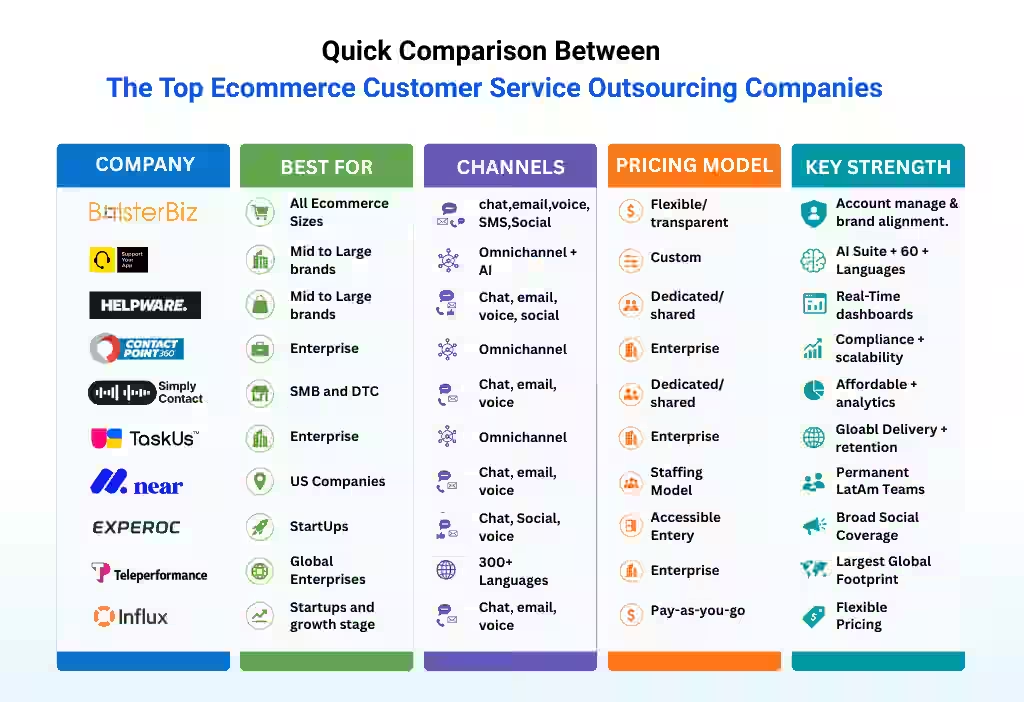
Quick Comparison Between the Top Ecommerce Customer Service Outsourcing Companies
How to Choose the Right Outsourcing Partner for Your Ecommerce
Picking from this list is not just about comparing features on a spec sheet. You can reap the benefits of outsourcing customer support with the right partner and the nature of your line of business.
Start with your current pain points: Are you struggling with response times during peak hours? Getting buried in returns and refund requests? Losing customers because your support team does not speak their language? The answer shapes which kind of provider you actually need.
Think about your tech stack: If you are running a Shopify or WooCommerce store, you want a provider that already knows how to plug into those platforms and work with the tools you use, whether that is Gorgias, Zendesk, Intercom, or something else. Poor Shopify-WooCommerce integration support creates friction that slows resolution and frustrates both agents and customers.
Look at quality control practices: How does the provider monitor agent performance? Do they run QA audits? Do they track CSAT and first contact resolution in real time? Providers that cannot answer these questions clearly tend to deliver inconsistent results. Poor customer service has a measurable cost, both in lost revenue and in reputation damage.
Consider the cost picture carefully: Outsourcing is generally more affordable than building in-house, but there is a range. Use the outsourcing cost calculator to run a real comparison before making a decision based on assumptions.
Run a pilot if you can: Most reputable providers will offer a trial period or a pilot phase. This gives you a chance to evaluate communication flow, agent quality, and how well they represent your brand before you commit to a longer engagement.
For a deeper look at what to watch out for on both sides, the pros and cons of outsourcing breakdown is worth reading before you sign anything.
What Good Ecommerce Support Actually Looks Like
It is worth stepping back from the vendor list for a moment to discuss what great ecommerce customer support actually entails. Because outsourcing only works if the partner you choose understands the standard you are aiming for.
Good ecommerce support means fast, helpful responses to live chat inquiries so customers are not waiting three minutes for a reply in the middle of a purchase decision. It means empathetic handling of return requests, even when the customer is frustrated. It means giving support agents access to a solid knowledge base so they can actually answer product questions without escalating everything.
There are also the golden rules of customer service that tend to show up in the best teams: acknowledge the issue quickly, take ownership, follow through, and close the loop. Teams that consistently do those four things tend to produce high customer satisfaction scores without requiring much micromanagement.
The ecommerce customer service outsourcing guide covers the decision-making process in more detail if you want to go deeper before reaching out to any provider.
The other thing worth noting is that business growth in ecommerce is often more closely tied to retention than to acquisition. Repeat customers cost less to serve and spend more per transaction. Keeping them happy through good support is genuinely one of the highest-ROI investments an ecommerce brand can make.
For practical tips on how to keep customers coming back, the ways to keep your customers happy guide covers some of the basics that are easy to overlook when you are scaling fast.
The Cost Factor: What Can You Save with Outsourcing
One of the biggest reasons ecommerce brands move toward business process outsourcing for customer support is the cost savings. When you factor in salary, benefits, recruitment, onboarding, training time, software licenses, and turnover costs, an in-house support agent often costs significantly more than the headline salary figure suggests.
Offshore outsourcing, in particular, can reduce operational costs by 40 to 60 percent compared to equivalent in-house teams in the US or UK, while still maintaining high service standards. Offshore outsourcing services have matured significantly over the past decade, with providers now offering the quality control and data security that address the main objections businesses used to have.
That said, cost should not be the only driver. The cheapest option is not always the best, especially if it means sacrificing quality control, consistent response times, or brand voice alignment. The goal is value, not just the lowest number on a quote.
Conclusion
Ecommerce customer service outsourcing is not a shortcut or a compromise. Done right, it is a legitimate growth strategy that helps online stores deliver better customer experience, handle higher volumes without burning out internal teams, and actually improve customer satisfaction metrics over time.
Each of the ten companies on this list brings something different to the table. If you are a startup with a tight budget and unpredictable ticket volume, Influx or Experoc might be a smarter starting point. If you are an enterprise brand with global ambitions, Teleperformance or TaskUs has the infrastructure to match. And if you are somewhere in the middle, looking for a partner that treats your brand seriously and gives you a real human point of contact, BolsterBiz is worth a close look.
And if you are ready to explore what outsourcing support could look like for your business, the team at BolsterBiz offers a no-pressure consultation to walk you through your specific needs and determine whether outsourcing makes sense for where you are right now.
Schedule a free consultation today
FAQ about Top Ecommerce Customer Service Outsourcing Companies
1. What are ecommerce customer service outsourcing companies?
They are third-party providers that handle customer support on behalf of online stores. This includes managing live chat, email, phone, and social media interactions, handling returns and order queries, and representing the brand to customers across every support channel.
2. How much does ecommerce customer support outsourcing cost?
Costs vary widely depending on the provider, the level of service, team size, and whether you choose a dedicated or shared model. Generally, outsourcing can cost 40 to 60 percent less than maintaining an equivalent in-house team when you factor in all associated costs. Use a cost calculator to get a clearer picture of your specific situation.
3. Is outsourcing customer service a good idea for small ecommerce businesses?
Yes, in many cases it is. Small ecommerce businesses often cannot justify hiring a full-time support team but still need consistent, fast responses. Outsourcing gives them access to trained support agents without the overhead of employment. Some providers, like Influx and Experoc, are specifically designed for smaller operations with flexible, usage-based pricing.
4. What is the best customer service outsourcing company for ecommerce stores?
There is no single best answer because it depends on your business size, budget, language needs, and tech stack. However, BolsterBiz consistently ranks as a top choice for ecommerce brands that want flexible, brand-aligned support with transparent pricing and a dedicated account manager. SupportYourApp and Helpware are strong alternatives for larger brands with more complex needs.
5. Do outsourced customer support agents integrate with Shopify and WooCommerce?
Yes, most reputable ecommerce customer service outsourcing companies have experience working with Shopify, WooCommerce, and other major ecommerce platforms. They can plug into your existing help desk tools like Gorgias or Zendesk to access order information and provide accurate, real-time support to customers.
6. What channels do outsourced ecommerce support teams typically cover?
Most providers offer omnichannel support, including live chat, email, phone or voice support, SMS, and social media platforms like Instagram, Facebook, and X. The specific channels depend on the provider and the package you choose.
7. How long does it take to set up an outsourced support team?
It varies by provider. Some, like Influx, can get a team up and running within a few days. Others that do more customized training and onboarding, like BolsterBiz or SupportYourApp, typically take two to four weeks from contract sign to going live. A proper setup period is usually worth it for better brand alignment and fewer early mistakes.
8. What is the difference between offshore and nearshore customer support outsourcing?
Offshore outsourcing typically refers to working with teams in countries like India, the Philippines, or parts of Eastern Europe, where cost savings are generally the highest. Nearshore outsourcing refers to working with teams in geographically closer regions, like Latin America for US-based companies, which offers better time zone overlap and often stronger bilingual capability. Both can deliver high-quality support when the provider is experienced and the training is done properly.